If your closet is overflowing or you’re battling the seasonal “where do I put these sweaters?” dilemma, the solution isn’t necessarily more closet space—it’s smarter containment. Storage boxes are the unsung heroes of a tidy home, turning chaotic piles of fabric into a structured, visual-friendly inventory. The key to successful clothing organization lies in choosing the right material for the job. You want boxes that breathe, fit your shelves perfectly, and make the daily hunt for a specific shirt feel effortless.
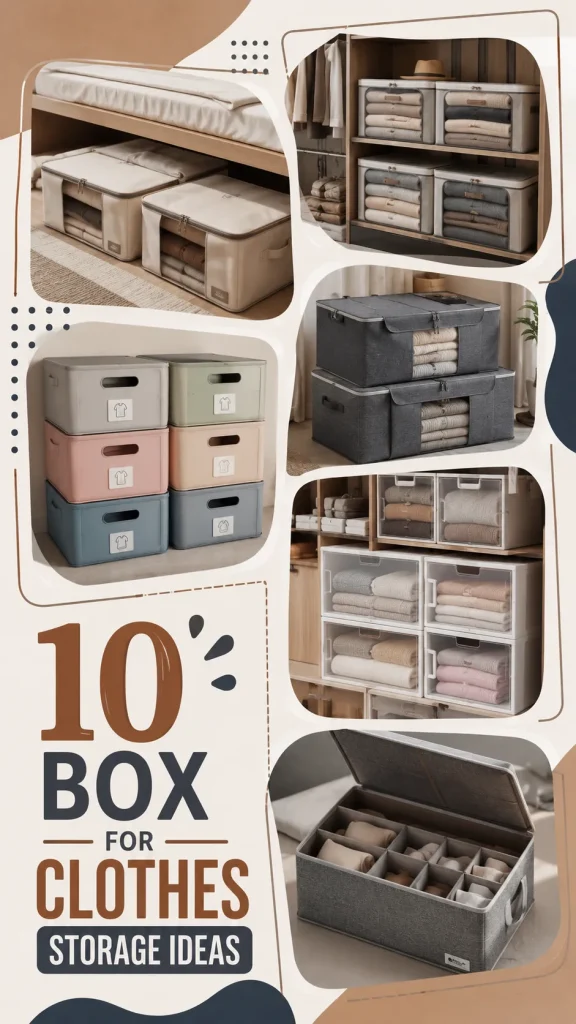
Whether you are looking to tuck items under your bed, stack them in a reach-in closet, or display them on open shelving, the right box can act as a bridge between a messy room and a tranquil sanctuary. Here are ten inventive box ideas for clothing storage that will help you reclaim your space and protect your wardrobe.
1. Breathable Cotton Canvas Bins
Cotton canvas is the gold standard for clothing storage because it allows your garments to breathe, preventing that stale, musty smell that often develops in plastic containers. These bins are perfect for seasonal items like sweaters or linens that need to be stored away for months at a time. They are soft to the touch, lightweight, and often feature reinforced handles that make them easy to slide off high closet shelves. Because they are flexible, they can be squeezed into tighter spaces without cracking or breaking, offering a forgiving, durable solution for everyday clothing organization.
How to Make
Measure your shelf depth and width to ensure a snug fit—uniformity is what creates that “custom-closet” look. If the bins look too plain, use a leather hole punch to add personalized, handwritten luggage tags to the front handles, clearly labeling what is inside (e.g., “Winter Sweaters” or “Gym Gear”). If you are DIY-inclined, you can even use fabric paint or stencils to add a pattern or your initials to the front of the bins, turning basic storage into a stylish design element.
Things Needed
- Cotton canvas storage bins with handles
- Leather or cardstock luggage tags
- Fabric marker or pen
- Measuring tape
- Stencils and fabric paint (optional)

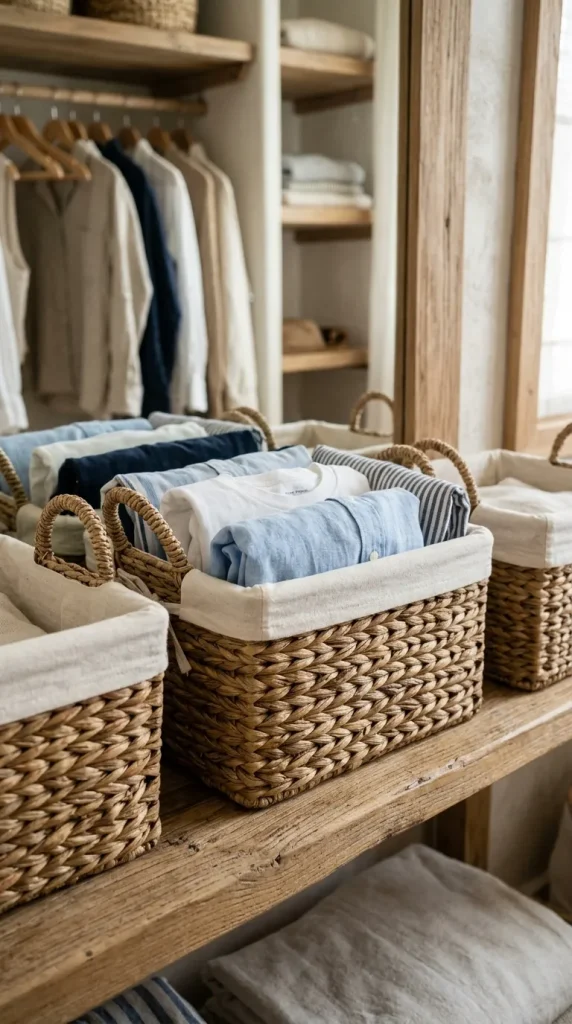
2. Woven Seagrass Baskets with Liners
If your storage is visible—perhaps on an open rack or at the foot of your bed—you want boxes that double as decor. Woven seagrass baskets add a natural, organic texture to your bedroom. The key to making them clothing-friendly is to ensure they have removable cotton liners. This prevents the rough weave of the seagrass from snagging delicate fabrics like silk, wool, or cashmere. These baskets are sturdy, eco-friendly, and bring a warm, “coastal-chic” vibe to your home while keeping your casual daily wear neatly contained.
How to Make
When selecting baskets, look for a consistent weave pattern to keep things looking intentional. If the liners don’t come included, you can easily DIY them by sewing simple fabric pouches using cotton muslin—they just need to be large enough to drape over the sides and tuck into the bottom. When organizing, try to keep the baskets slightly under-filled to allow for airflow. These work wonderfully for everyday items like t-shirts, jeans, or pajamas that you reach for daily, as the open top makes access quick and intuitive.
Things Needed
- Seagrass baskets
- Cotton muslin fabric for liners
- Sewing kit or fabric glue
- Measuring tape
- A few essential oils (optional)
3. Clear Acrylic Modular Boxes
For the fashion-forward individual who wants to see their collection at a glance, clear acrylic boxes are a game-changer. These are essentially “display cases” for your clothes. They are perfect for accessories like scarves, hats, or even rolled-up t-shirts. Because they are transparent, you eliminate the “out of sight, out of mind” problem, making you more likely to wear items you would otherwise forget. They stack perfectly, creating a clean, high-end “boutique” aesthetic in your closet. They are also incredibly easy to clean—a quick wipe with a microfiber cloth keeps them looking pristine.
How to Make
The secret to acrylic success is modularity. Buy boxes from a single collection so that the stack lines up perfectly. If you are storing delicate items, you can line the bottom with acid-free tissue paper to protect the fabric from the hard surface. For a more organized feel, use these for uniform items—like rolling all your leggings or workout tops so they stand upright in rows. This makes it feel like you are walking into your own personal high-end retail shop every time you open your closet doors.
Things Needed
- Clear, stackable acrylic storage boxes
- Acid-free tissue paper
- Microfiber cleaning cloth
- Adhesive labels (clear ones look best)
- A tape measure

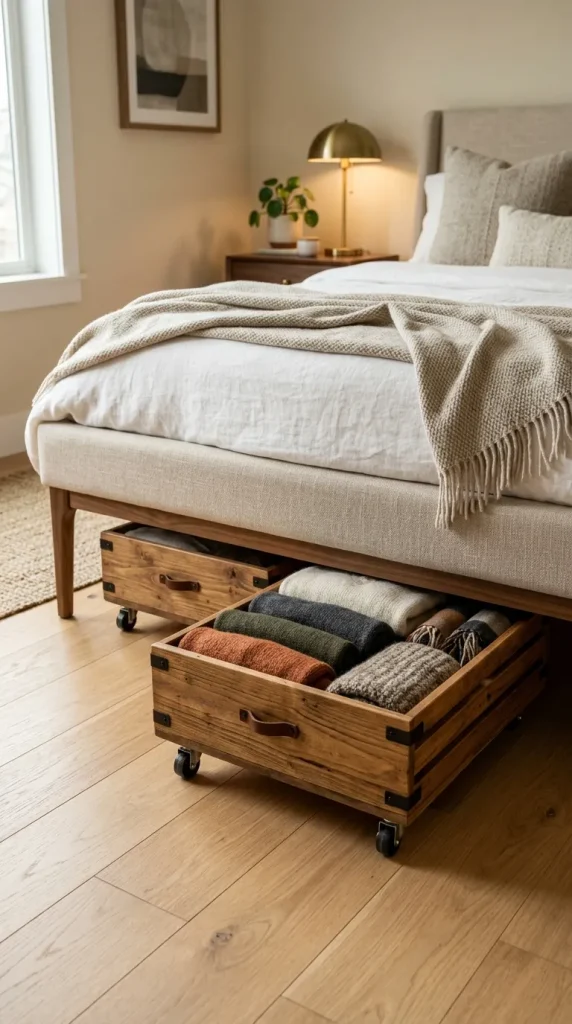
4. Under-Bed Rolling Wood Crates
The area under your bed is arguably the most wasted storage real estate in the home. Instead of using flimsy plastic bags, use sturdy wooden crates mounted on casters. This transforms the under-bed space into a “hidden drawer” system. Wood crates are excellent for clothing storage because they are robust and can handle the weight of bulkier seasonal items like heavy winter coats or boots. The wheels make it simple to roll them out entirely, giving you full access to the back of the box without having to crawl on the floor.
How to Make
Source wooden crates that are low enough to fit under your bed frame—measure your clearance first! Attach four heavy-duty swivel casters to the bottom corners of each crate. If you want to keep dust away, you can staple a piece of breathable canvas to the top of the crate to act as a “lid.” Organize your clothes by season or category inside, and use small cedar balls placed in the corners to keep your stored clothing smelling fresh and deter pests while they are tucked away.
Things Needed
- Sturdy wooden crates
- 4 swivel casters per crate
- Screws and drill
- Breathable canvas or linen fabric
- Cedar moth-repellent balls
5. Felt Foldable Dividers
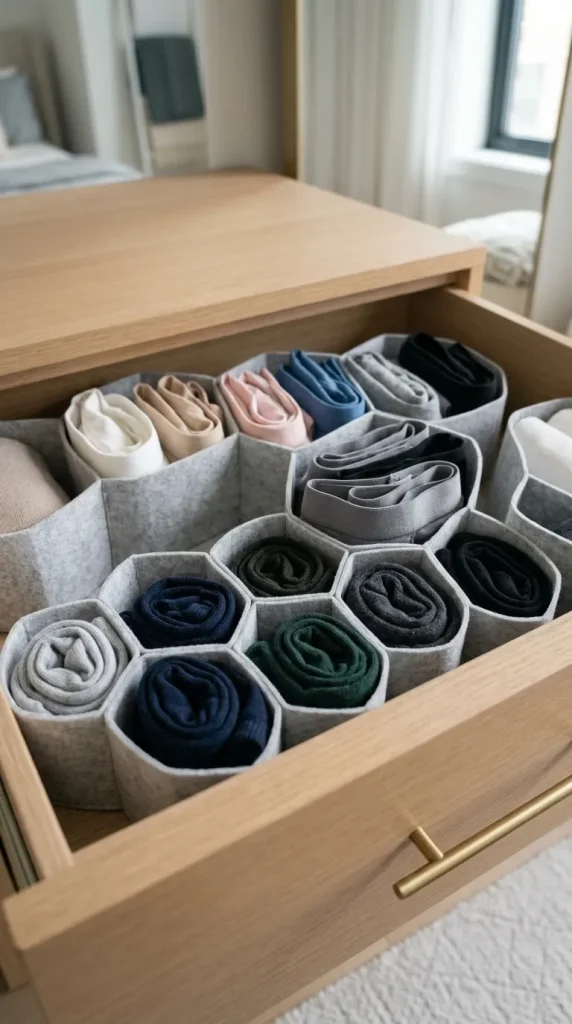
Felt is an often-overlooked material for clothing storage, but it is actually ideal for soft items. Felt boxes are soft, structured, and surprisingly durable. They are perfect for storing smaller clothing items like socks, underwear, or bras inside drawers. Because they are slightly pliable, they fit into awkward drawer shapes that rigid plastic boxes cannot accommodate. Felt also naturally grips the inside of your drawer, so the boxes won’t slide around every time you open and close the drawer.
How to Make
For the best results, group these in a honeycomb or grid-like pattern within your drawers. If you can’t find the exact dimensions, you can purchase large felt sheets and glue them together to create custom-sized compartments. Use them to “file-fold” your socks or underwear—meaning you fold them into small rectangles so they stand upright. This method allows you to see every single pair you own at once, preventing the dreaded “searching for a matching sock” scenario in the morning.
Things Needed
- Soft felt storage bins
- Scissors (to trim if necessary)
- Cardboard inserts (optional for extra structure)
- Drawer measurements
- Adhesive velcro strips (to keep bins together)
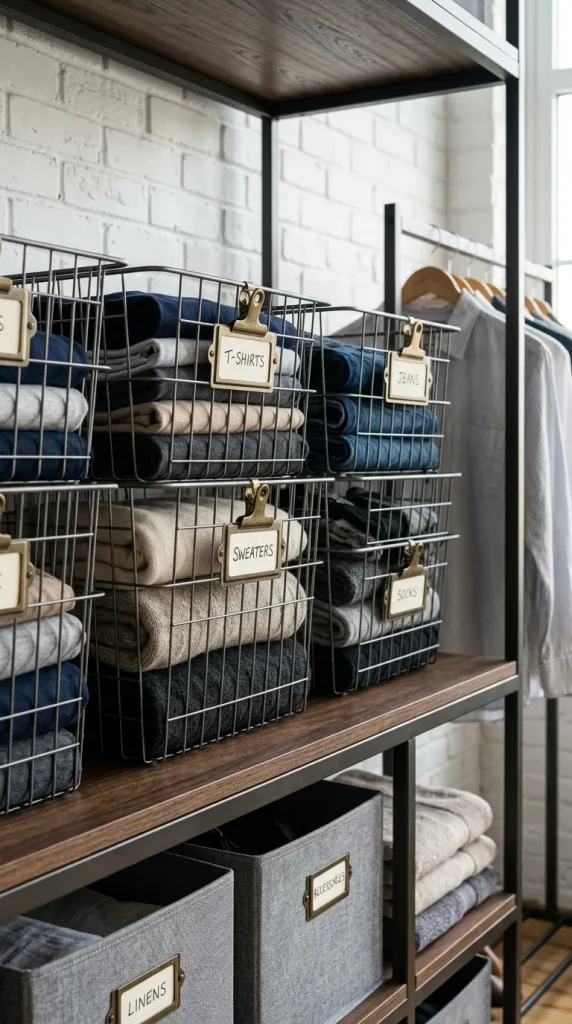
6. Stackable Wire Baskets
If you prefer a rugged, industrial aesthetic, wire baskets are a fantastic storage solution. They provide total visibility and maximum airflow, making them perfect for items that might be slightly damp (like gym clothes) or just need constant ventilation. Wire baskets add a bit of visual texture to a closet and are very easy to hook together to create a stable “tower” of storage. They are also incredibly resilient—you can wipe them down with a damp cloth and they never warp, crack, or fade, even after years of use in humid climates.
How to Make
Use these baskets in “high-traffic” zones. Because they are open, they are best for items you use constantly. Label them using small metal clip-on tags—this gives them an “old school” library or vintage boutique vibe. If you are stacking them, be sure to use heavy-duty zip ties to secure the baskets to one another, preventing the stack from tipping over when you pull out a single item. This creates a rock-solid, custom-built shelving unit that fits exactly where you need it.
Things Needed
- Wire storage baskets
- Metal clip-on labels
- Heavy-duty zip ties (to stack them)
- Damp cloth for cleaning
- Paint (optional, to match your closet)
7. Velvet-Lined Jewelry and Accessory Boxes
For those small, precious clothing accessories—like silk scarves, gloves, or delicate bow ties—standard bins are too large. A dedicated accessory box with a velvet lining prevents delicate fabrics from snagging and keeps them organized. Velvet is the ultimate luxury material for storage because it is non-slip and gentle. You can find these in many shapes and sizes, or create your own by lining a simple wooden box with self-adhesive velvet fabric. It keeps your high-end accessories from getting tangled, crushed, or dusty.
How to Make
If you want a custom solution, buy a wooden or sturdy cardboard box and line the interior with self-adhesive velvet or felt. You can add small cardboard dividers to create “cells” for specific items like belts or scarves. The key here is to keep the contents sparse—don’t jam items into the velvet boxes. Use them for your “finishing touches” to ensure they stay in mint condition until the moment you need them.
Things Needed
- Wooden or stiff cardboard boxes
- Self-adhesive velvet or felt lining
- Cardboard scraps (for dividers)
- Scissors
- Ruler

8. Bamboo or Rattan Trays
Sometimes, you don’t need a box with tall sides. For shirts or lightweight sweaters that you want to stack neatly on a shelf, bamboo or rattan trays are a great choice. They add an earthy, spa-like feel to your closet. Trays help define a “boundary” for your clothing stacks, ensuring that your neat piles of shirts don’t slowly migrate across the shelf. They are low-profile, which makes it easy to lift a stack off the shelf if you need to access items stored behind it.
How to Make
Measure the width of your closet shelves and buy trays that cover about 80% of the shelf width. This leaves a small gap on the sides, which makes the whole setup feel less crowded. Stack your shirts or sweaters neatly within the tray. Because the sides are low, you can easily see the collar or hem of the items, helping you identify what’s in the stack. These look beautiful when paired with a matching bamboo rod or shelf.
Things Needed
- Bamboo or rattan trays
- Tape measure
- A label maker (to add small, discreet labels)
- Sweater/shirt stack

9. Acid-Free Archival Boxes
If you have “keepsake” clothing—like a wedding dress, a christening gown, or an heirloom sweater—standard cardboard boxes are your enemy. They contain acids that will eventually yellow and degrade natural fabrics. Invest in acid-free archival boxes. They are usually white or gray, sturdy, and designed to last for decades without off-gassing chemicals onto your clothing. These are the gold standard for long-term storage and ensure that your most sentimental wardrobe pieces stay exactly as you left them.
How to Make
Always clean your garments before placing them in archival boxes, as sweat or perfume residue can cause damage over time. Line the box with acid-free tissue paper, place the garment in, and then add another layer of tissue paper on top. Do not use plastic bags inside the box. Seal the box with archival-quality tape and label it with the contents and the date stored. Keep these in a cool, dry place away from direct sunlight, such as the top of a closet.
Things Needed
- Acid-free archival storage boxes
- Acid-free tissue paper
- Archival-quality sealing tape
- Permanent marker
10. Collapsible Fabric Cubes
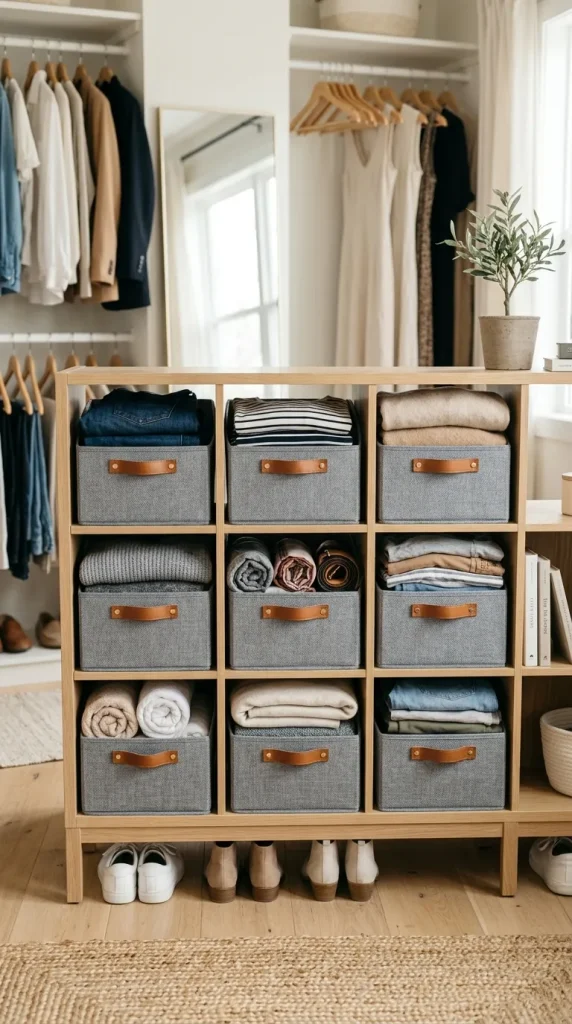
The ultimate renter-friendly storage solution: the collapsible cube. When you aren’t using them, they fold down into a thin, flat pancake, making them the most space-efficient option on this list. These are perfect for temporary storage, such as when you are rotating your wardrobe for a move or storing off-season items in a spare bedroom. They are usually budget-friendly, come in every color imaginable, and fit perfectly into standard “cube storage” shelving units, which are excellent for maximizing closet storage space.
How to Make
To elevate these from “dorm room” to “chic,” avoid the bright neon colors. Stick to neutrals like gray, charcoal, cream, or navy. Add a sophisticated pull—replace the standard fabric handle with a leather tab or a brass pull that screws through the front. This simple upgrade instantly makes a budget cube look like a high-end custom storage solution. Label them with elegant, printed labels to finish the look.
Things Needed
- Collapsible fabric cubes
- Leather scraps (for upgraded pulls)
- Brass screws/bolts
- Printed labels
- A screwdriver