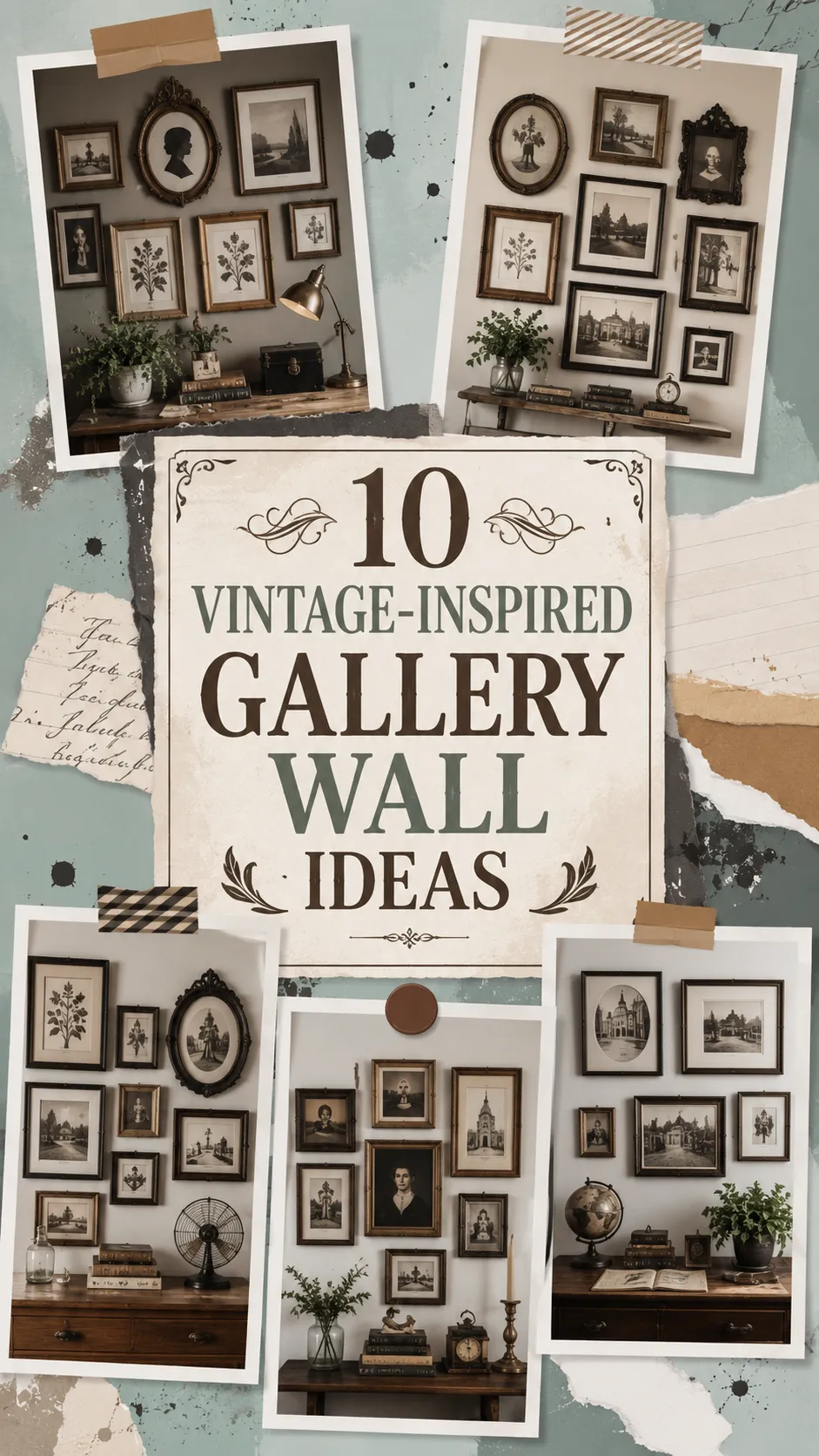
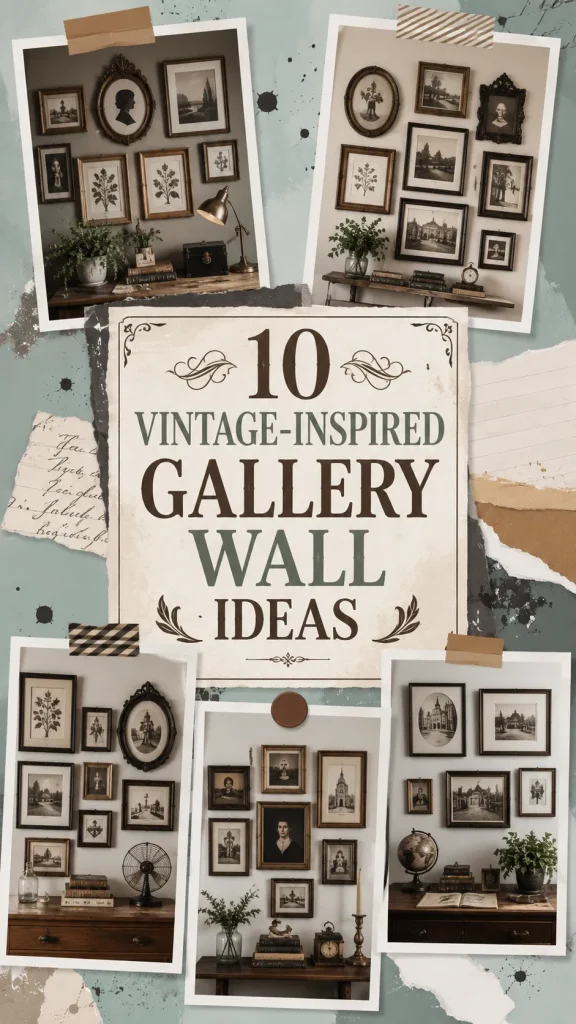
A gallery wall is one of the most effective ways to tell a personal story, and when you embrace a vintage-inspired aesthetic, that story gains a layer of depth, history, and sophistication. Moving away from mass-produced art and towards a curated collection of antique prints, salvaged frames, and personal artifacts transforms a plain wall into a professional-grade design feature. The vintage approach celebrates the “collected” look—where items feel as though they were gathered over decades rather than bought in a single shopping trip. By focusing on cohesive color palettes, intentional framing, and a mix of media, you can create a gallery wall that feels both timeless and perfectly at home in your space. These 10 vintage-inspired gallery wall ideas are designed to inspire a high-end, artistic display that celebrates heritage, texture, and refined design.
1. The Botanical Study Grid
There is an inherent elegance to 18th and 19th-century botanical illustrations. Grouping these prints in a perfectly symmetrical grid creates a sense of order and high-end curation that feels straight out of a natural history museum. The beauty of this approach is its formality; by using identical or near-identical frames, you transform even simple, inexpensive prints into a stunning, professional-looking centerpiece. It is an aesthetic that works beautifully in dining rooms, home offices, or hallways, bringing a touch of the outdoors inside with a clean, scholarly, and artistic edge.
How to Make
Source public-domain botanical images and print them on high-quality, off-white, or slightly yellowed cardstock to mimic the look of aged paper. Use matching, simple frames—either thin wood or brushed brass—to keep the focus on the art. Map out your grid on the floor first, ensuring equal spacing between every frame (typically 2 to 3 inches). Use a level and a measuring tape religiously during installation. The key to the “vintage” feel is the consistency of the frames, which makes the entire collection feel like a single, massive piece of art.
Things Needed
- Vintage botanical prints
- Matching frames (thin wood or brass)
- Off-white, heavy cardstock
- Level and tape measure
- Picture hanging hardware

2. The Antique Portrait & Frame Collection
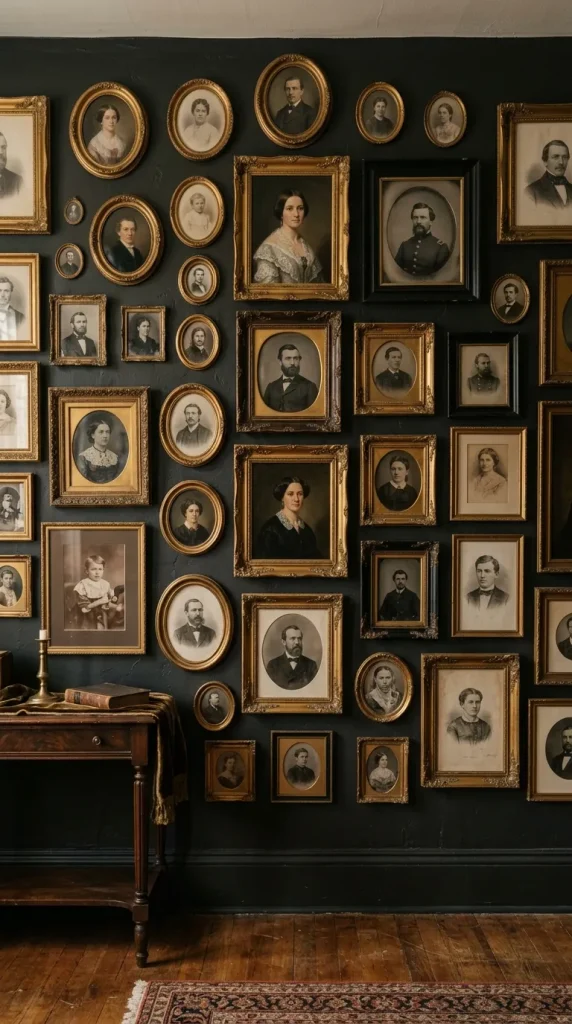
Creating a wall filled with portraits—ranging from daguerreotypes and oil-painted miniatures to vintage black-and-white photography—is the ultimate way to honor a sense of heritage. The “vintage-inspired” aspect comes from the ornate, mismatched, and deeply textured frames. Don’t worry about the people in the portraits being family; the “found” portrait is a classic staple of interior design that adds mystery and character. This wall will feel moody, storied, and incredibly sophisticated, providing a dramatic focal point that invites guests to look closer and appreciate the human history captured in each frame.
How to Make
Scout flea markets and thrift stores for portraits, whether they are sketches, photographs, or paintings. Look specifically for ornate, gilded, or dark wood frames, even if the glass is cracked or the frames are chipped—this adds to the charm. Once you have a collection, lay them out to create a balanced mix of shapes and sizes. Hang them relatively close together so they feel like a single, cohesive unit. Mixing the medium (oil painting next to a photo next to a sketch) ensures the wall feels curated rather than cluttered.
Things Needed
- Vintage portraits (sketches, photos, paintings)
- Mismatched, ornate frames
- Gold or dark wood finish
- Hanging wire and hooks
- Painter’s tape for layout
3. The Blueprint & Architectural Sketch Wall
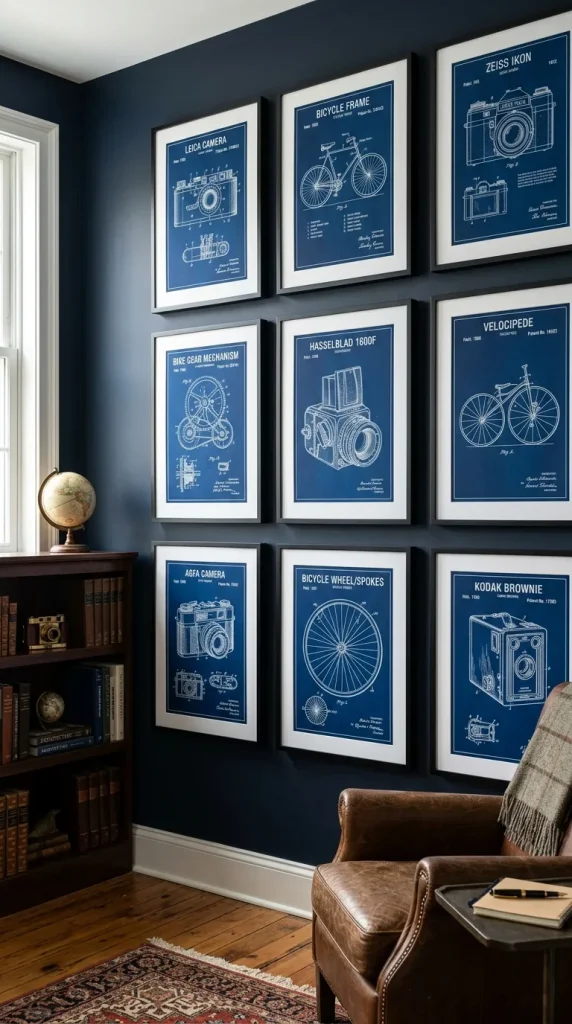
For a more industrial or masculine vintage vibe, look to antique architectural blueprints, hand-drawn floor plans, or patent drawings. The contrast between the stark white lines and the deep blue or sepia-toned backgrounds is striking and inherently artistic. This wall is perfect for a study, office, or den. By framing these in simple, clean-lined black frames, you bridge the gap between vintage history and modern design. It’s an intellectual, sophisticated aesthetic that celebrates the beauty of structure and the history of innovation in a way that feels both timeless and highly curated.
How to Make
Find patent drawings for vintage objects like cameras, sewing machines, or bicycles. Print them in the original blueprint blue or sepia tone. Use black, boxy frames to give the wall a modern, graphic finish. Because these prints are often busy, keep the layout slightly more organized—perhaps a horizontal row or a loose, balanced stack. If the blueprints have a lot of text, pair them with one or two larger, simpler prints to give the eye a place to rest, ensuring the wall remains legible and elegant.
Things Needed
- Vintage patent or architectural drawings
- Blue or sepia print tone
- Boxy black frames
- Measuring tape and level
- Picture hanging hardware
4. The Vintage Map & Globe Gallery
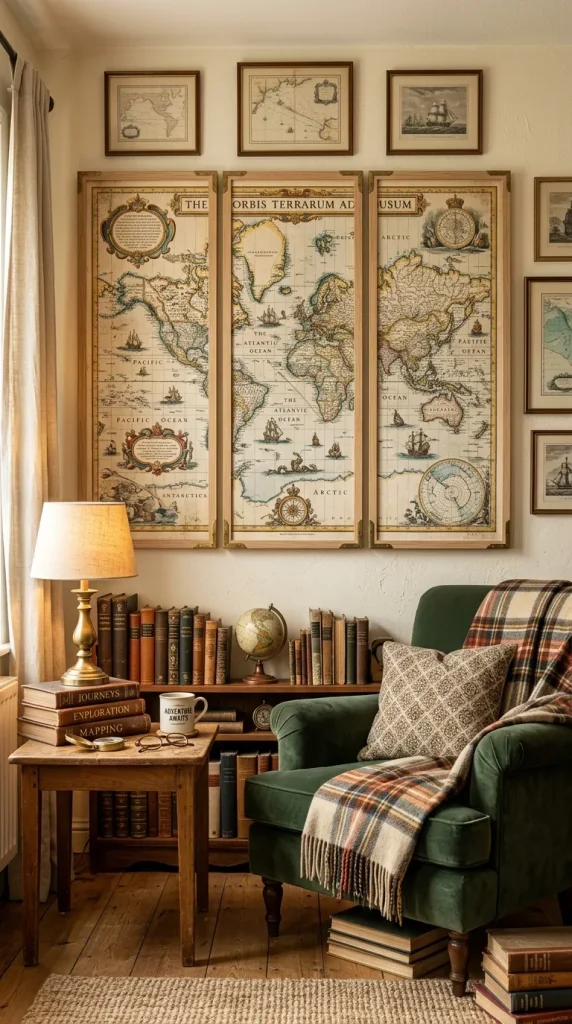
Nothing speaks to a sense of adventure quite like vintage cartography. A wall dedicated to maps—whether they are world maps, local city plans, or nautical charts—creates a sense of wonder and historical depth. The warm, faded colors of vintage maps add a layer of natural “color” to your room that feels soft and welcoming. This is a brilliant way to incorporate color without using loud, modern hues. The elegance of this theme comes from the intricate details of the maps, which turn the wall into a destination for conversation and exploration.
How to Make
Search for maps of places that have personal significance or simply beautiful color schemes. You can frame them individually or, for a more dramatic look, cut a very large map into three or four vertical panels and frame them separately to create a “split” image effect. Use wood frames with a light, natural finish to complement the map’s paper. Group the maps near a comfortable chair or a desk to create a “study” vibe. This setup feels intellectual, storied, and incredibly welcoming for any space.
Things Needed
- Vintage maps (local or global)
- Wood frames with natural finish
- X-Acto knife (if splitting a map)
- Level and hardware
- Large wall space
5. The Ephemera & Postcard Collage
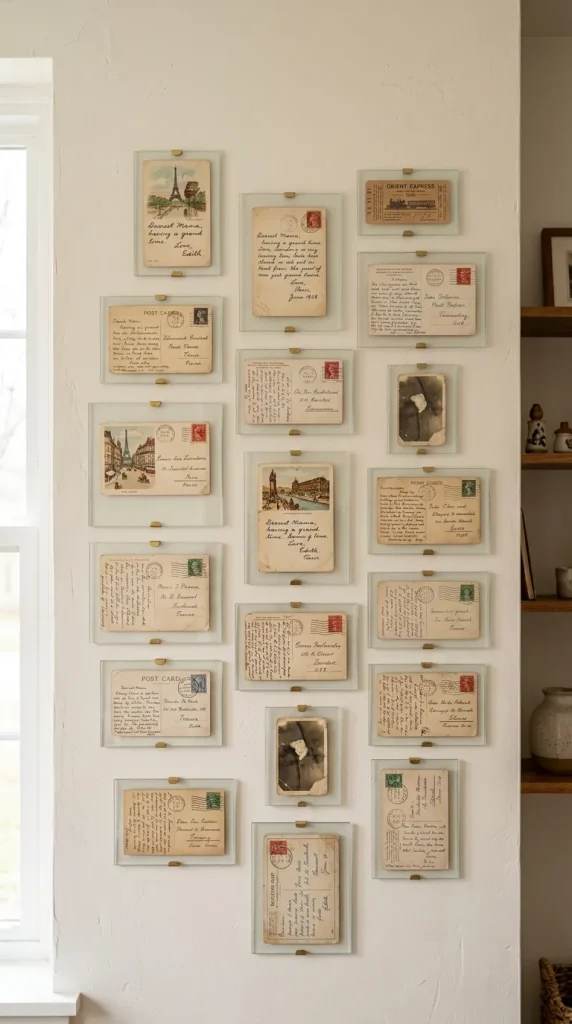
A gallery wall doesn’t have to be limited to professional art. A collection of vintage postcards, travel tickets, old letters, or postage stamps creates a deeply personal and intimate display. This “ephemera” wall feels like a diary on display. By using “floating” frames—where the object is sandwiched between two pieces of glass—you highlight the delicate, paper-like nature of the items. This aesthetic is soft, tactile, and incredibly sweet, making it the perfect choice for a cozy corner, a bedroom, or a dedicated reading nook.
How to Make
Collect vintage postcards or old letters from flea markets. To make them look professional, use floating frames that are slightly larger than the postcards, allowing the wall color to show through around the edges. This creates a clean, intentional “border” for each piece. Arrange them in a casual, cloud-like cluster rather than a strict grid to keep the vibe relaxed. The key is to keep the frames consistent (e.g., all thin brass or all light wood) so that the variety of the items inside doesn’t feel chaotic.
Things Needed
- Vintage postcards or old ephemera
- Floating glass frames
- Consistent frame finish (brass or wood)
- Painter’s tape for arrangement
- Picture hanging hardware
6. The Dried Flora & Pressing Wall
Inspired by the Victorian practice of preserving plants, a gallery wall of dried flowers and leaves feels delicate, feminine, and profoundly beautiful. Using floating frames to display pressed ferns, wildflowers, or herbarium-style clippings creates a modern, high-end “science” look. This aesthetic is incredibly popular for those who love a light, airy, and nature-inspired home. It brings texture to your walls in a way that flat prints cannot, and the natural, muted colors of the dried plants fit perfectly with a warm, neutral, and vintage-inspired color palette.
How to Make
Press your own flowers or buy them pre-pressed from a high-end botanical supplier. Use floating frames to ensure the transparency of the glass allows the wall color to interact with the pressed flora. For a cohesive look, group plants with similar colors—like all ferns and greens, or all soft-toned wildflowers. Arrange them at different orientations—some vertical, some angled—to mimic the organic growth of a garden. This wall will feel like a living, breathing part of your home and is a stunning way to capture nature’s fleeting beauty.
Things Needed
- Pressed flowers, ferns, or leaves
- Floating glass frames
- Tweezers for placement
- Consistent frame finish
- Painter’s tape for layout

7. The Vintage Mirror & Relief Wall
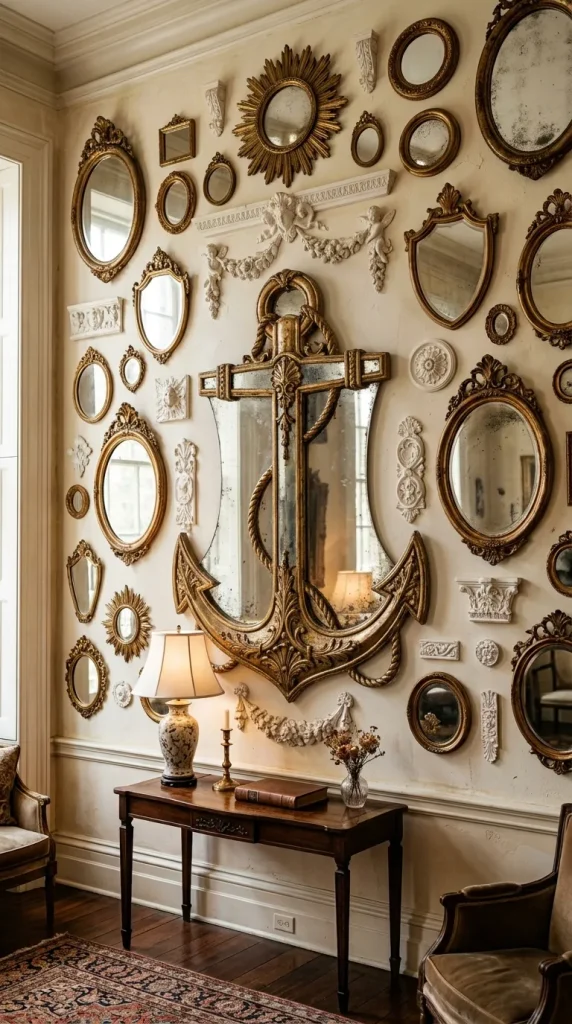
Mixing art with other wall decor, such as vintage mirrors, relief carvings, or architectural salvage, creates a wall with incredible depth and reflection. This is not a flat gallery wall; it is a three-dimensional experience. The mirrors bounce light around the room, making it feel larger and brighter, while the relief carvings add texture and history. This theme is highly sophisticated and works best in a formal living room or dining area where you want the space to feel luxurious and well-appointed. It is a bold, high-end choice that defies the standard “print in a frame” gallery wall.
How to Make
Find a mix of vintage mirrors with different shapes—circles, ovals, and rectangles—with aged, tarnished glass. Pair these with a few small, plaster relief carvings or antique wooden wall plaques. Because these items have different thicknesses, the wall will have a sculptural quality. Start by hanging the largest mirror first as your anchor point, then build outward, interspersing the smaller mirrors and carvings. Use a soft, neutral wall color to ensure the wall doesn’t become too overwhelming or busy.
Things Needed
- Vintage mirrors with aged glass
- Plaster relief carvings or plaques
- Large anchor mirror
- Heavy-duty hanging hardware
- Neutral wall paint
8. The Neutral-Tone Texture Wall
Sometimes, the most elegant gallery wall is the one that says the most with the least amount of color. By focusing on a monochromatic or neutral-tone palette—think creams, beiges, whites, and greys—you create a gallery that is soothing, high-end, and perfectly coordinated. This theme isn’t about the individual art piece, but about the collection of shapes, textures, and neutral prints. It creates a “quiet” wall that is incredibly calming. This is the ultimate choice for a modern farmhouse or a minimalist-inspired space that still wants to feel curated and artistic.
How to Make
Gather prints, sketches, and textures—like a piece of vintage linen, a charcoal sketch, and a faded map—all within the same neutral color family. Use frames that have different textures—some wood, some painted metal, some gilded—but keep them all in neutral colors. By keeping the color palette restricted, you can be much freer with the shapes and sizes of your frames. The result is a sophisticated, calm, and organized wall that feels intentionally designed rather than just “decorated.”
Things Needed
- Prints/sketches in neutral tones (cream, grey, beige)
- Textural elements (vintage fabric, charcoal)
- Mismatched but neutral-colored frames
- Level and tape measure
- Neutral wall color

9. The Music & Lyric History Wall
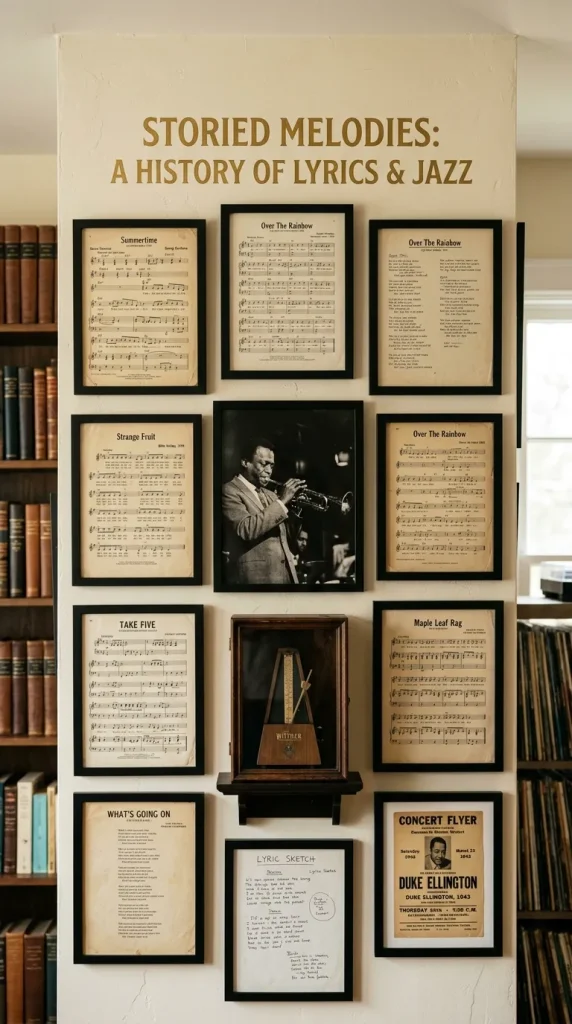
For the music lover, a gallery wall celebrating vintage sheet music, concert posters, or album covers creates a wall with personality and sound. Vintage sheet music, with its beautiful typography and elegant paper, looks stunning when framed. Pair these with old-school black-and-white photos of jazz musicians or concert venues to complete the vibe. This theme is intellectual, personal, and a fantastic conversation starter. It feels like a space that is lived-in, loved, and filled with culture, making it the perfect choice for a study, music room, or living space.
How to Make
Find vintage sheet music for songs that hold personal significance. Frame them in simple, clean-lined black frames to let the typography be the focus. Add one or two larger pieces, like a framed vintage concert poster, to act as the “anchor” of the collection. You can also include small, framed “music-themed” objects like an old metronome or a violin string mounted in a shadowbox to add dimension. Keep the arrangement balanced by interspersing larger pieces with smaller, more detailed ones to ensure the wall feels harmonious.
Things Needed
- Vintage sheet music
- Concert posters or album art
- Clean-lined black frames
- Shadowboxes for music-themed objects
- Level and hardware
10. The Graphic Typography & Signage Wall
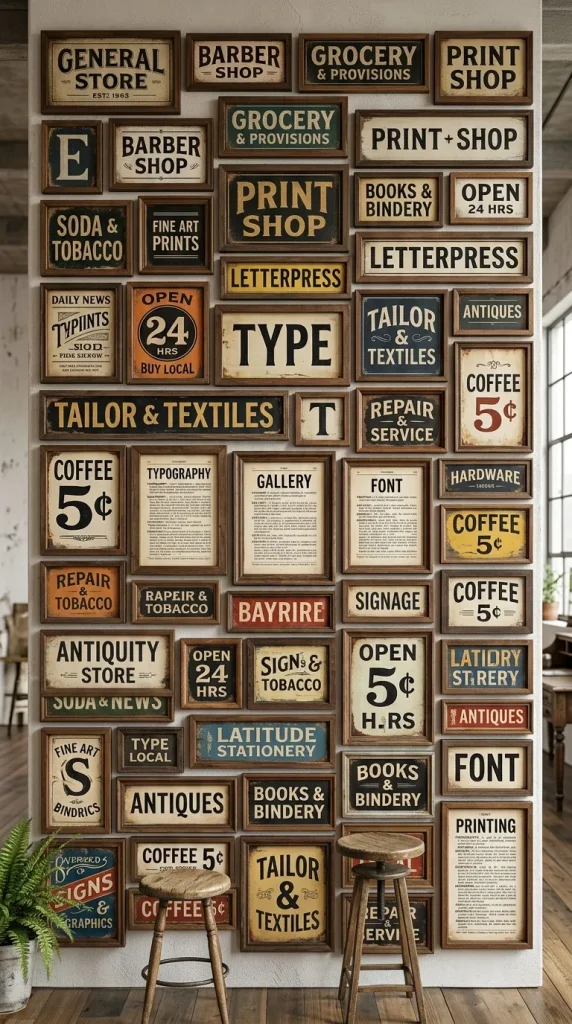
Vintage typography—whether it’s old shop signage, grocery store labels, or antique book covers—brings a bold, graphic element to your gallery. This theme is clean, punchy, and feels very “studio-like.” By mixing different fonts, sizes, and styles of writing, you create a wall that is dynamic and interesting without needing any images at all. This aesthetic is for the design-conscious person who appreciates the art of language and the history of print. It’s a striking, modern way to use vintage elements that keeps your wall feeling fresh, bold, and intentionally curated.
How to Make
Hunt for vintage advertisements, old-fashioned signs, or pages from antique dictionaries or encyclopedia sets. Frame these in simple, boxy frames that let the words reach the very edge of the glass. Because the art is text-based, you can be very creative with the layout—try a “jumbled” look where sizes and shapes overlap slightly, or a very structured grid for a cleaner feel. The key is to ensure the typography is legible and clear, creating a wall that is not just seen, but read.
Things Needed
- Vintage signs or typography prints
- Old book pages or dictionary prints
- Boxy, simple frames
- Graphic layout planning
- Level and hanging hardware
Conclusion
A vintage-inspired gallery wall is one of the most rewarding home projects because it allows you to combine your personal history with the history of the objects you love. Whether you choose the scholarly grid of botanical prints, the moody reflection of an antique mirror wall, or the tactile charm of pressed flora, each of these ideas offers a way to bring depth and character to your home. The secret to success lies in the balance between the collection and the framing—consistency in one allows for creativity in the other. As you begin to build your gallery, remember that it doesn’t need to be completed in a single afternoon; the most beautiful walls are often those that grow and evolve along with your tastes. Take your time, hunt for those perfect vintage pieces, and enjoy the process of turning your wall into a reflection of your own unique aesthetic.