Leather crafting is one of the most rewarding and tactile DIY hobbies you can explore. There is a unique satisfaction in taking a raw piece of vegetable-tanned leather, cutting it to shape, and assembling it into a functional accessory that you will use every single day. For beginners, a wallet is the absolute perfect starting point. It requires minimal material, introduces you to the fundamental skills of the craft, and yields a highly practical item that actually improves in appearance as it ages and develops a rich patina.
Many aspiring crafters are intimidated by the perceived complexity of working with leather. They worry about expensive tools, complicated stitching patterns, and ruined materials. However, leatherworking does not have to be difficult or costly. By starting with simple, beginner-friendly designs, you can master basic skills like saddle stitching, edge burnishing, and pattern cutting without feeling overwhelmed. This comprehensive guide details ten accessible and stylish DIY leather wallet ideas designed specifically for beginners, complete with construction tips to help you succeed on your first attempt.
1. The No-Stitch Folded Card Holder
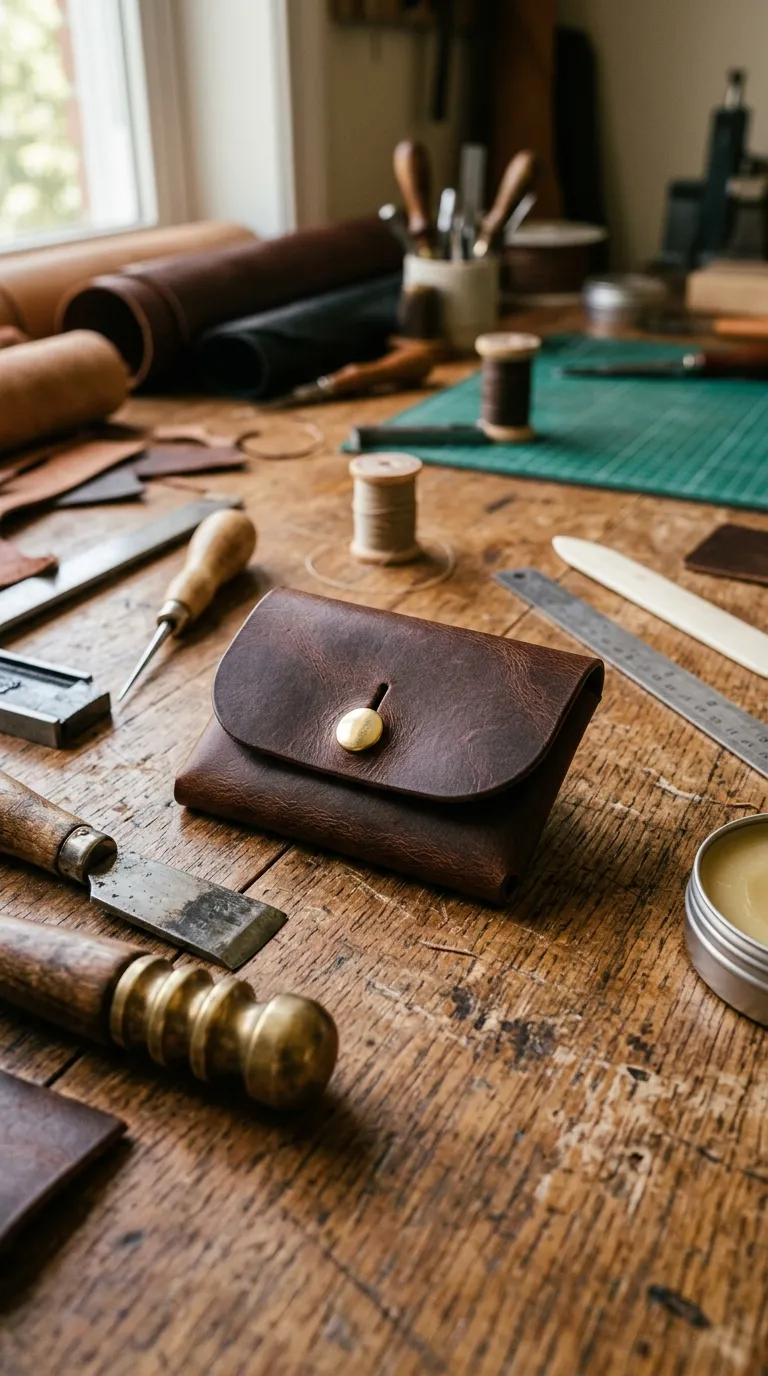
If you have never picked up a leather needle or thread, the no-stitch folded card holder is the ultimate entry-level project. This design relies entirely on clever folding techniques and a single metal fastener, such as a Chicago screw, a button stud, or a heavy-duty snap. Because there is absolutely no sewing involved, you can complete this project in under thirty minutes while still producing a highly functional, minimalist wallet.
To create this wallet, you will need a template that features a single piece of leather with folding flaps. It is best to use a thin, flexible leather, such as a 3 oz to 4 oz vegetable-tanned or oil-tanned leather, which folds easily without cracking. After cutting out your pattern using a sharp utility knife, you simply fold the side wings inward, fold the bottom flap up, and secure them all together by punching a hole and installing your metal hardware. This project is excellent for learning how to cut precise straight lines and install basic metal hardware.