Embroidery is one of the most relaxing, accessible, and versatile crafts you can explore. In recent years, it has experienced a massive modern revival. No longer confined to traditional tablecloths or vintage handkerchiefs, contemporary embroidery has found a permanent home inside the humble wooden hoop itself. Instead of treating the embroidery hoop as a temporary tool to hold your fabric taut while you work, modern crafters use it as the final frame. This transformation is known as embroidery hoop art, and it is a fantastic way to add handmade charm, texture, and color to your home decor.
If you are a complete beginner, the world of hand embroidery might seem intimidating at first. You might look at complex, highly detailed pieces and wonder how you could ever replicate those intricate textures. Fortunately, embroidery is incredibly forgiving, and you only need to master a few basic stitches to create stunning, professional-looking wall art. By combining simple techniques with creative materials like felt, paint, tulle, and negative space, you can produce beautiful designs that look highly sophisticated. Here are 10 creative, beginner-friendly DIY embroidery hoop art ideas to kickstart your crafting journey and inspire your next weekend project.
1. The Simple Botanical Leaf Frame
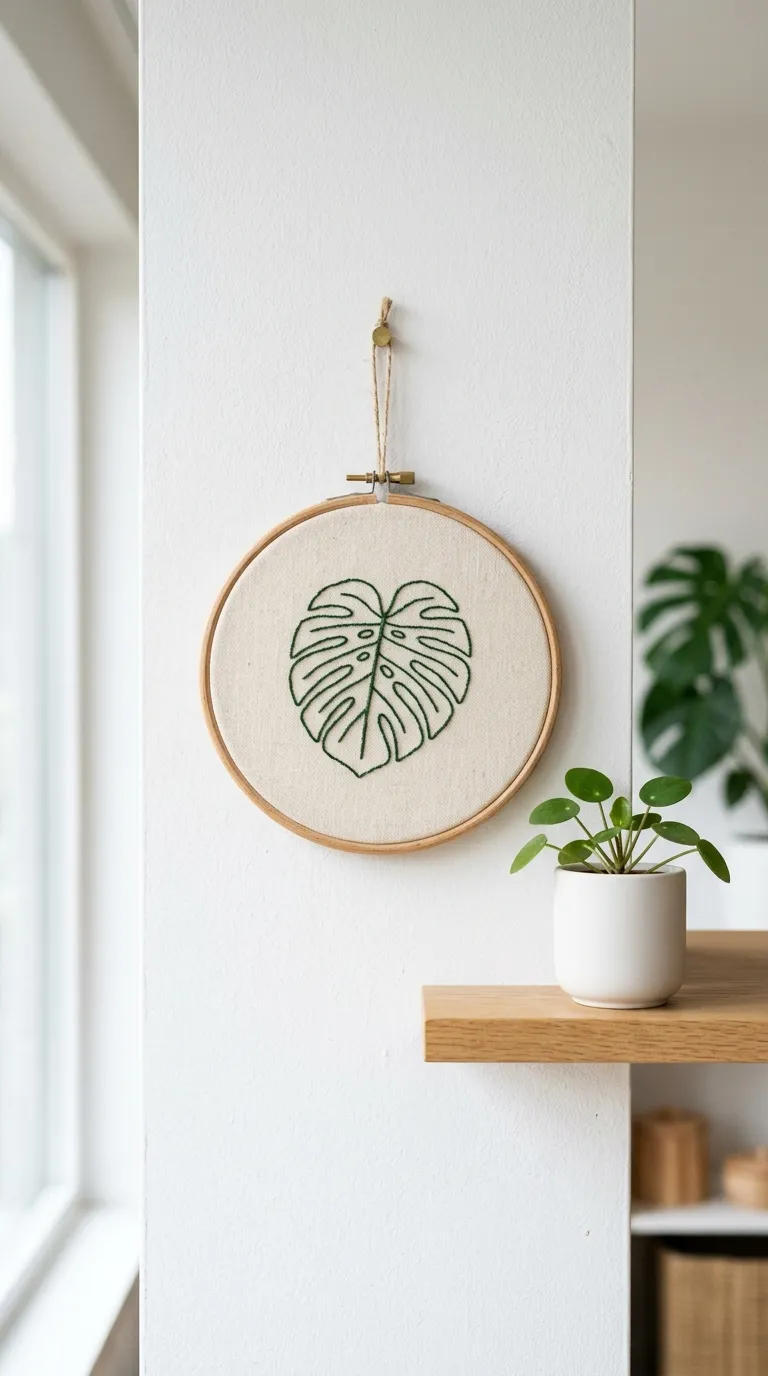
Botanical designs are perfect for beginners because nature is beautifully imperfect. If a stitch is slightly crooked or a leaf is a bit asymmetrical, it only adds to the organic, realistic charm of the piece. For this project, you will need a basic wooden embroidery hoop, a piece of neutral cotton or linen fabric, and green embroidery floss in two or three different shades to create depth and dimension.
Start by tracing a simple vine or a single monstera leaf onto your fabric using a water-soluble transfer pen. To bring your botanical drawing to life, you will use the satin stitch for solid leaves or the stem stitch for delicate vines. The stem stitch is incredibly easy to learn; it creates a clean, rope-like line that is perfect for curved stalks. If you want to fill in solid leaf shapes, the satin stitch involves placing straight stitches close together to create a smooth, shiny surface. Once completed, wash away your transfer lines, trim the excess fabric, and secure it to the back of the hoop for a clean, minimalist plant-themed decoration.